|
|
About three
years ago, I became curious about a jazz series called Unheard Music,
which began in 2000. I thought that it was instant karma: that music
fans in Atavistic, an indie record label, finally felt the frustration
that the best stuff was left unheard and were doing something about
it. So I started buying them and realised that they were mostly
free jazz reissues dating from the '60s.
Most of
the time, they were unheard because they were released in extremely
limited quantities and, in some cases, these reissues had to be
reconstructed from some collector's original vinyl copy.
In most
cases, the music was just ahead of its time. The best example is
probably Sun Ra's Nuclear War. Made in 1982, Nuclear War has never
been issued in its entirety and only two tracks have seen the light
of day on a 12-inch single. For those of you who bought Yo La Tengo's
interpretation in 2002, which featured a chorus of children yelling,
"motherfucker," as vocal an anti-war protest as can be, you can
also hear Ra say it in a more loose, casual setting. Ra was disappointed
when Columbia Records turned down the opportunity to release the
album. He was prescient about the advent of gangsta rap.
There are
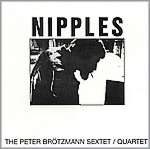
so many gems in the series, Peter Brotzmann Sextet's Nipples (1969),
which features both saxophonist Evan Parker and guitarist Derek
Bailey. The former's first recordings appeared only the year before
while the latter started in 1965. Or Clifford Thornton's New Art
Ensemble's Freedom And Unity (1967), which has the first recorded
appearance of trumpeter Joe McPhee.
Most of
the music here is so intense that little of it is likely to be found
in a $ingapore home. The oft-heard complaint in our indie music
history, that unwinding to relaxing music after a hard day's work,
is more important than discovering passion, will make the Unheard
Music series anathema to most ears.
Critics reviled
much of this music in the '60s. There weren't a lot of places that
would allow this music to be heard. As Valerie Wilmer notes in her
book, As Serious As Your Life: "During the 1960s, sessions held
in lofts owned by musicians, painters and others, were common. The
audiences were small and very little money was involved, but the
new music was being propagated. 'I know at that period everybody
felt as though something new was forming,' said drummer Milford
Graves. 'It felt like a revolution in the music and people felt,
well, a lot of people won't understand what we're doing, voters
won't help us or record companies - we're trying to get a listening
audience'."
The first sighting
of free jazz was on Ornette Coleman's Something Else! (1958). As
Coleman succinctly states on the liner notes: "I think one day music
will be a lot freer. Then the pattern for a tune, for instance,
will be forgotten and the tune itself will be the pattern, and won't
have to be forced into conventional patterns. The creation of music
is just as natural as the air we breathe. I believe music is really
a free thing, and any way you can enjoy it you should."
Yet the
thrill is the search for new sounds. Free from the restrictions
of chords and scales, the new jazz musician was concerned with the
purity of new sounds. As Art Ensemble of Chicago saxophonist Roscoe
Mitchell notes: "The musicians are free to make any sound they think
will do, any sound that they hear at a particular time. That could
be like somebody who felt like stomping on the floor… well,
he would stomp on the floor. And you notice the approach of the
musicians to their instruments is a little different from what one
would normally hear... I'm getting more interested in music as strictly
atmosphere, not so much of just standing up playing for playing's
sake, but my mind stretches out to other things, like creating different
sounds."
Perhaps
for the new music fan today, hearing the early beginnings of free
jazz is an important way to understand why improvisational music
is making a comeback. Fans of Sonic Youth, Yo La Tengo, Jim O'Rourke,
David Toop or John Zorn can see just how the big wheel of music
keeps turning if they turn on to early Joe McPhee, Sun Ra, Evan
Parker or John Coltrane.
Some ear- bending
suggestions:
SUN RA ARKESTRA
Nuclear War [Unheard Music Series]
An instant classic had
it been released in 1982, Sun Ra's Nuclear War worked along the
same lines as Stanley Kubrick's film, Dr Strangelove - apocalyptic
and darkly humorous. As Ra sings: "If they push that button,
your ass gotta go. Now whatcha gonna do without your ass?" At
times soulful, funky, laid-back and far out, Ra even tackles Charlie
Chaplin's signature song, Smile. Hear it now before the bomb drops.
THE PETER
BROTZMANN SEXTET/QUARTET
Nipples [Unheard Music Series]
One of the
first releases on the Unheard Music Series, Nipples was produced
by Manfred Eicher, later to found ECM, the famous European jazz
label. Only two tracks are featured on this 1969 LP, the title track
and Tell A Green Man. Featured artistes include Brotzmann and Evan
Parker on sax, Derek Bailey on guitar, Fred Van Hove on piano, Buschi
Niebergal on bass and Han Bennink on drums. The music on Nipples
is fiery, mind-bending and shattering and the quartet, minus Parker
and Bailey, relaxes a little on Tell A Green Man. And there is also
More Nipples. Look for that.
ALEXANDER VON SCHLIPPENBACK TRIO
Pakistani Pomade
[Unheard Music Series]
As important
as Parker and Bailey are to the UK avant scene, Brotzmann and Schlippenbach
are key figures for the Germans. Here in 1973, pianist Schlippenbach,
Evan Parker and drummer Paul Lovens show the kind of heat that a
three piece can generate. This album, particularly, is for Parker
fans. Here he blows some extremely strange and intense noises from
his sax. It's quite a wonder to behold. It's like watching fireworks
in your brain.
THE CLIFFORD
THORNTON NEW ART ENSEMBLE
Freedom And Unity [Unheard music Series]
With liner
notes by Archie Shepp and a long poem by Ornette Coleman, Freedom
And Unity (1969) underpins where a lot of new jazz came from. As
Shepp notes: "Thornton's brooding trombone is a constant reminder
of the bitter sweetness of the black reality. You will find textures
in this album… deep mind blowing things of which you never
dreamed. But the object is not to 'blow your mind' - I mean - to
save it…" Recorded the day after Coltrane's funeral, Freedom
And Unity was a battle for the black soul, its passionate cry tinged
with a sense of mourning. Thornton, a well-known free jazz figure
in the '60s, died forgotten in the '80s, but the album is, at least,
finally rediscovered.
|