|
|
|
|
|
|
|
|
LISTENING
ROOM
CHARLES
MINGUS This release
actually came out on a three-volume Italian bootleg vinyl label, Ingo.
Last month, I managed to find the actual Volume One on vinyl in Berlin
but I know it's practically impossible to track down volumes II and III.
So it's a great service that jazz fan, Cary Wolfson, has collected all
three albums into one handy double CD edition. There are several reasons
to be excited. First, 1964 was the last year of saxophonist Eric Dolphy's
life. Dolphy died on June 27 in Berlin. This gig took place on April 16
in Bremen. And it's amazing to hear him play brilliantly right till the
end.
DAMIEN
MARLEY The drive of the powers that be to render revolutionaries into harmless icons knows no bounds. Damien Marley, Bob's youngest son, has had a massive summer-long hit with this album's title track, inspired by the 2001 documentary Life And Debt. Damien has been condemned in the Jamaican press for being too political and thus betraying his father's legacy! Damien embraces that legacy - sex and salvation, revolution and ruins, a burning hatred of the police - in full and expands it by seamlessly mixing and matching roots and dancehall sounds. His live
guests include Nas, Bounty Hunter, Bobby Brown, the Miami Symphony and
Black Thought of the Roots; Bunny Wailer, Eek-A-Mouse and his father appear
via samples. Even the relatively weakest element - the ballads - draw
power from Damien's grainy voice while the rest of the tracks ascend toward
heaven as swirls of pop rapture, gritty hip-hop and 30-plus years of Jamaican
innovations compressed into an hour. A masterpiece. - RRC JAMES
BLOOD ULMER In which
Ulmer and producer Vernon Reid combine to ignore their jazzbo status and
create what amounts to a modern John Lee Hooker record. Shades of Olu
Dara! - RRC Jimmy Smith
meets Moby at Kurt Cobain's vacation home in Sweden. This could be the
dawning of the grunge organ trio except there's no bass player. Or it
could be the Stooges to Medeski, Martin and Wood's Rolling Stones. It's
definitely the weirdest instrumental album in years. - RRC
SECRET
MACHINES Six tracks
from Dallas indie band who, like most, honors its roots. Difference is,
these guys know what those roots are, from anguished indie rock to early
krautrock, hair bands and U2 which, not by the way, also enables them
to come up with truly original versions of songs by Dylan [Girl From The
North Country] and Van Morrison [who could imagine even a bad cover of
Astral Weeks, let alone one this good?]. What their semi-reverent decompositions
of Money suggests is that the Machines know what being on a major label's
all about, too. - Rock & Rap Confidential
CHARLIE
HADEN/LIBERATION MUSIC ORCHESTRA As with all Liberation Orchestra albums since the first one in 1969, bassist Charlie Haden reminds us that "The whole underlying theme is to communicate honest, human values, and in doing that to try to improve the quality of life." So it's music that takes centre stage. Not in Our Name reminds us that the world's public did not agree to the War on Iraq hence the numerous banners in Europe bearing the words of protest "Not in Our Name", which Haden witnessed while on tour. Thus Haden and pianist/arranger, Carla Bley have reclaimed anthemic American songs in Liberation-style settings. America the Beautiful, Lift Every Voice and Sing and Amazing Grace are all covered, alongside newer Americana such as Pat Metheny's This is Not America and Ornette Coleman's Skies of America, as a statement that people have a right to their own history. Perhaps the
biggest challenge is how to render the familiar unfamiliar. This is however
a weakness of the album. While the playing is rich with strong performances
from trumpeters Michael Rodriguez and Seneca Black, saxophonist Miguel
Zenon and even tuba player Joe Daley, there is an element of vitality
and surprise that's lacking. The spirit is still willing but the flesh?
Who knows? This is Not America gets a reggaefied workout while Amazing
Grace receives a New Orleans blues vamp. Ironically, a beautiful moment
is the classical piece, Going Home (from the Largo of the New World Symphony)
by Czech composer, Antonin Dvorak. And as one critic noted, the title
track oddly reminds one of the soundtrack of Jacques Demy's The Young
Girls of Rochefort. While Not In Our Name is perhaps the weakest of the
four Liberation Orchestra releases, no memory is complete without it.
(6.5) - Philip Cheah
JENS
LEKMAN I was in
a French record store last year when the store-owner played Jens Lekman's
debut, When I Said I Wanted to Be Your Dog. I thought it sounded really
familiar and when I guessed it as Magnetic Fields, the store-owner pulled
out Jens Lekman. So here's Lekman's new album and here's my theory. Lekman
comes from Sweden and he's your everyman singer-songwriter. He not only
sounds like Magnetic Fields' Stephen Merritt but he also sounds like New
Order's Bernard Sumner (if you add synth drums behind him as on Maple
Leaves), Morrissey, Jonathan Richman (as on A Sweet Summer's Night on
Hammer Hill's playful scat) and even Edwyn Collins. Depending on which
generation you belong to, he sounds like whoever you are familiar with.
ANDREW
PEKLER Moving away
from his previous two albums (Station to Station and last year's Nocturnes,
False Dawns & Breakdowns) which sampled jazz, ambient experimentalist,
Andrew Pekler's Strings + Feedback is another cinematic journey. This
time, it's not "a random walk through the clear and mysterious air of
a metropolis at midnight" as on his two previous albums, but a re-creation
of a '50s low-budget science-fiction soundtrack. Working with sampled
pianos and strings, Pekler modulates each sound to create rhythms, tension,
melody and atmosphere. The album opens with P'luckd, a haunting melody
of sensitive beauty. Before you know it, the strident strings of Ogonjok
are plucking away in a rapid steady rhythm, the album's high point. Then
Pekler shifts gear again and for the remaining seven tracks, he creates
an ambience of brooding, unsolvable mystery through what sounds like archaic
synthesisers and modulators (Mirrorise, Vor). Pekler's album is like the
secrets of Forbidden Planet re-stated, and never so lovingly. (8) -
Philip Cheah
WILLIAM
PARKER It's easy
to dismiss bassist William Parker's recent Luc's Lantern as an unchallenging
easy-listening experience especially if you consider his large free jazz
canon. In many ways, Luc's Lantern is similar to albums such as Wayne
Shorter's Native Dancer or Keith Jarrett's My Song, melodic outings by
jazz adventurers.
WADADA
LEO SMITH Back in the
mid-70s, I used to buy a lot of vinyl records even by artistes I didn't
know about. Record stores were closing as old buildings were being destroyed
to build new malls. So there was a lot of music in Singapore going on
sale. That's how my LP collection just mushroomed. I wasn't into jazz
then but I bought lots, on instinct that I would turn to it one day.
RICHARD
YOUNGS Electric
noise folkie, Richard Youngs is a strange pleasure to savour. Leaving
behind his more acoustic leanings since his fifth album, The Airs of the
Ear (2003), an experimental noise element has crept into his work. The
modal drone of his new album, The Naïve Shaman, fits the ritualistic
atmosphere of his gurgling electronic minimalism (all constructed on his
home computer). Youngs plays everything from guitars to a kazoo. In this
five-song cycle, his intoned vocals invites us to sing along with him
on the title track, Life on A Beam: "We were born on a laser beam, on
a beam, on a beam, on a beam..." Every track - Illumined Land, Sonar in
A Soul, Summer's Edge II, Once It Was Autumn - brings us back to a dreamtime,
when we were making music in Syd Barrett's head. (7.5) Philip Cheah
WINDSOR
FOR THE DERBY Eleven years
ago, Jason McNeely's and Dan Matz's Windsor for the Derby were part of
the emerging post-rock scene along with bands such as Stars of the Lid
and Labradford. They aren't really post-rock anymore. On their new album,
Giving Up the Ghost, they have structured the tracks to be heard like
a vinyl record with five songs each for two sides. Side A reveals their
post-punk leanings with the catchy Praise, almost a dead ringer for New
Order while Shadows is like Joy Division without Ian Curtis. Side B showcases
their acoustic bent (excepting the blistering Gathering) with the haunting
heartbreak track, Giving Up, The Light is On and the gorgeous love ballad,
Every Word You Ever Said. Windsor for the Derby is a private taste made
for fans who wonder how far the bedroom recording aesthetic can go.
(6.5) - Philip Cheah
ART
BLAKEY & THE JAZZ MESSENGERS Dizzy Gillespie said that he didn't know what inspired him to write the title tune, but there's no way to separate what it means on this 1960 album from Dizzy's groundbreaking introduction of Latin flavor into jazz and from the growing identification of black America with Africa. The eleven-minute
explosion that asks us to imagine a "night in Tunisia" begins with Blakey
on drums and everyone else on percussion. Showoff solos by Lee Morgan
and Wayne Shorter set up Blakey to take center stage and vice versa. It's
like a slam dunk contest, only with a team trophy. The rest of the album
is fine vintage Blakey, but you may need to rest a while before you listen
to it. - Rock & Rap Confidential
GRANT
GREEN This 1970
jazz guitar record came out at a time when artists like Green were played
on commercial FM radio alongside Earth, Wind & Fire and Stevie Wonder.
Highlights include Cease The Bombing, a song of such languid beauty that
you can only imagine that the bombing has ceased, and A Day In The Life,
where, while Green is toying idly with the melody, horns jump in with
such an effect that the tune becomes completely transformed. - Rock
& Rap Confidential
ALBERT
AYLER TRIO Moving on from a short-lived stint with the Bill Evans Trio in 1964, bassist Gary Peacock found himself with the Albert Ayler Trio in 1965. The Spiritual Unity album was the first recording for Bernard Stollman's ESP-Disk label. The contrast that Peacock must have found himself in couldn't be more startling. With Evans, the music was introverted and mental, and with Ayler, it was passionate and uninhibited. It was also primal, transcendental and revolutionary. It was completely the other extreme of what Evans was doing with the trio. If Evans music spoke to you, Ayler's spirit was screaming at you. Yet its centre was quiet. It had to be because all three players had to listen intently to each other to communicate as a unit. It was their spiritual unity. As Ayler said: "We weren't playing, we were listening to each other." After the leaders of the new music such as Ornette Coleman, John Coltrane and Cecil Taylor, Ayler belonged to the second wave and was influential on even Coltrane. Coltrane considered Ayler's Spiritual Unity as an influence on his album, Ascension (1965). Ayler was
at heart a melodic player and if you hear enough free jazz, you wonder
why Ghosts (the opening and closing track of the album) isn't a Top 40
hit. Its marching melody is instantly recognisable and immediately infectious.
Ayler played a hard plastic tenor saxophone and constantly stretched its
sonic possibilities. On Spirits, it sounds like a violin. But what informs
the fury of the music is Ayler's feeling for the blues and spirituals.
Ayler used to say that his music was a cry of truth or a cry to God. Forty
years on, it still is. (10 and more) - Philip Cheah
CanBe Fans of The High Llamas who love the Beach Boys can now find another dreamy abstract hybrid pop band in CanBe, but this time fueled by punk. Self-released and mysterious, CanBe is CanBe, even if all the other musicians are listed. Sad Beautiful is a punk-pop song that drives on with smart lyrics. Anhedonia makes you think of the High Llamas drunk on the Beach Boys: "Emotion is just an pneumonia, there's no cure for anhedonia/ She can't believe it all turned out like this, you concur". CanBe's vocalist can be a little monotonous but they make up for it with deadsure lyrics and lovely pop tunes. But the master work is Rearrange Me, a long wistful lament that has a haunting melody and lyrics that show why CanBe can be more well-known: "I said to myself I might need to get out of this place/I'm losing myself not to mention the whole human race/ what price would you pay to be free/ This world doesn't change so I guess I'll just rearrange me/ I'm not sure that I came prepared to change all that I said/ There's no choice involved here 'cause soon enough we'll all be dead." It's as gently apocalyptic as CanBe. (6.5) - Philip Cheah Note:
Visit http://cdbaby.com/cd/canbe/from/indiepro
to order the album.
AUDIOSLAVE Audioslave
tackles Springsteen's elemental blues question: "How do you live broken-hearted?"
with a vision big enough to encompass the betrayed American, the jilted
lover and the forgotten parent. Each song finds its own answers, but "Be
Yourself" shows why the most popular cliche on the radio today may still
be the best one. The spectrum of musical color produced by Audioslave
calls to mind Hendrix. Album closer "The Curse" rings off with the kind
of love that survives no matter what, the singer knowing he may not get
there with you but wishing you Godspeed just the same. - Rock &
Rap Confidential
XPENSIVE
DOGS Ten years
ago, Gary Tanin of Xpensive Dogs was among one of those who relied purely
on the internet to create music. Never meeting Japanese musician Toshiyuki
Hiraoka, the two traded music files on the net to create the Dogs' debut
release. The years have certainly honed Tanin's craft - the production
is exquisite and the performance solid. The album opens promisingly. The
instrumental title track, with its glimmering guitar, would do any surf
movie proud. Hell, with its "this is the place" and "psycho killer" phrasing,
and Flowers Grow, with its Latin rhythm, both recall the Talking Heads.
However, it is tracks like Sacrifice, Pinochio and The World Has Gone
Insane - with their bouncy beat, crafty wordplay and, not to mention,
the album's all-star cast - that put the Dogs down the evolutionary path
that included bands such as Was (Not Was). Now that Tanin has exorcised
some of those ghosts that might have dogged him, perhaps he would like
to consider a full-fledged surf album as his next project - after all,
the man has a twang that just won't go away. (7) - Stephen Tan
BOB
FRANK A much more assured outing than his last album, Pledge of Allegiance (2004), Bob Frank's new Ride The Restless Wind goes down the countrified singer-songwriter road. It features a full band including fiddle player Gabe Witcher (who plays with Merle Haggard), multi-guitarist Jim Monahan and others who bring out the melodies in Frank's love songs. While one wishes that Frank's voice had that special spark to carry the songs to another level, the songs themselves, Cup of Wine and Within A Few Degrees, prove his future as a songwriter. (5) - Philip Cheah Note:
Visit http://www.bobfranksongs.com/pages/shopping.html
to order the CD.
THE
HEATERS Being a self-confessed
non-power-pop fan, I can still tell you that power pop devotees will find
that this new live, double-CD of the early '80s Seattle band, The Heaters,
is pretty essential. For one, it shows the lineage of Seattle pop, from
Paul Revere and the Raiders, a Northwest band in the '60s, to why a band
like Nirvana in the '90s had such a strong sense of melody. Making their
debut in the late '70s with the hit single, I Don't Like Your Face and
then their debut album, Have An Idea, The Heaters displayed Beatles/Byrds-like
harmonies with songwriting wit. My brain tends to go to sleep from too
much melody but there is one track here that displays Seattle irreverence
in all its glory. The song is Let's All Smoke. It's not commissioned by
the Tobacco Association of America and there are no Marlboro references
though the band namechecks (Humphrey) Bogart and (Lauren) Bacall. It's
the closest to punk rock that The Heaters get to. It also explains why
the first disc live dates from '78-'81 doesn't differ drastically from
the second disc 2001 reformed gig. They still have their verve. (7)
- Philip Cheah
MARS
VOLTA Art rock
is bullshit but it's bigger bullshit to claim that Mars volta makes art
rock. They make the kind of dense, fertile rock popularized by, especially,
the Who. Admittedly, they do it with fewer outbursts of three minute passion,
but like the Who - and unlike Gentle Giant, Yes and their ilk - they play
their dense compositions with a rock beat. Mars Volta's is deeply informed
by the bandmember's Chicano roots. The only other art rock that has so
much groove is probably P-Funk's. - Rock & Rap Confidential
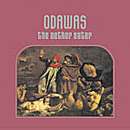
ODAWAS Pleasant
but uneventful, the space-age pop of Odawas' The Aether Eater (named after
a Native American tribe) is a galactic opera of a journey across the universe.
Of course, this would include a Neil-Young clone as one of the three Odawas
members sounds like Young circa Buffalo Springfield and early period Young.
It seems that After the Goldrush must really have had a sci-fi angle to
it. Unfortunately, Odawas lack Young's lyrical edge and I must caution
you against bothering to listen and read the lyrics to this album at the
same time. Soundwise, much of the future was already recorded in the '60s.
The Peter Thomas Orchestra from that era sounds more far out than anything
here. And Song of Temptations is a pale approximation of Pink Floyd's
Great Gig in the Sky. This is one cosmic album that is light years behind
the times. (4) - Philip Cheah
VARIOUS This double
CD compilation of 50 Beatles cover versions by Canadian acts includes
a track by track story of the songs by author Craig Cross (Beatles Discography:
Minute-By-Minute, Hour-By-Hour, Day-By-Day). It's a loving tribute that
unfortunately falls short of real inspiration. There are nice moments
such as Al Kooper's smoking blues rock version of Eleanor Rigby or Cadence's
funky Drive My Car, and Mean Mr Mustard's speed metal treatment by Receiver.
But the rest of the set merely reminds you to return to the originals.
Still, Cross' sleeve notes are a joy to read. It proves how great art
is lifted out of the ordinary. The source material for much of these songs
were just bits of life that the Fab Four found intriguing, from John's
quarrel with Yoko that became Across the Universe to George's celebration
of Eric Clapton's love for chocolate in Savoy Truffle. (6) - Philip
Cheah
YASUNAO
TONE & HECKER After months
of listening to this on and off, it occurred to me to wonder whether Jimi
Hendrix would have liked this non-spontaneous computer sound improvisation.
And I think he would have said: "Now let's see whether we can play Voodoo
Chile like this." Essentially, Yasunao Tone and Florian Hecker are sound
experimentalists. Tone founded the Ongaku Group in 1960, which concentrated
on improvised music and he began participating in the Fluxus movement
in 1962. Hecker has been working in computer music since 1996. Last year,
we reviewed his stunning computer music album, PV Trecks. His collaboration
with Tone here is more conceptually amazing. Both artistes worked on the
long title track, Palimpsest, by sending each other sound material. Tone's
input was his creation of sound from drawing.
YO
LA TENGO From indie
noise to sweet pop, Yo La Tengo found the depth of their work in And Then
Nothing Turned Itself Inside Out (2000). They then covered Sun Ra's Nuclear
War brilliantly in an EP (2002) and showed off a mellow experimentalism
in Summer Sun (2003). On Prisoners of Love, they take you back to their
beginnings in 1985. Fans of Yo
La Tengo need not track down this release unless they can score the three-disc
edition that features rare tracks. Non-fans will find this sampler intriguing
for awhile and then realise that they are better off finding the complete
albums. About the only value of this new compilation is the sampling of
the numerous EPs that were released but are hard to find now. (6) -
Philip Cheah
MEGADETH Though the
album's cover [showing Bush, the Clintons, Cheney, Rumsfeld, Rice and
others reckoning with death] suggests an overt political statement, the
urgency of this album captures a world swirling in madness with very little
hope for political clarity. The value Dave Mustaine most seems interested
in here is the truth, which is why the lyric - "I say what you want to
hear and not mean anything" - of the chime-laden Scorpion rings up an
image of George W and all the other faces on the cover at the same time.
- Rock & Rap Confidential
BECKY
HOBBS No More War is the first single from Beck Hobbs' Songs From The Road Of Life. It mounts a vigorous and thoughtful protest against Yankee Doodle militarism, and doesn't for a moment forget that it's a kickin' country tune. Let There Be Peace is dedicated to Hobb's fifth great-grandmother, Nacy Ward, Beloved Woman of the Cherokee. In December, Hobbs emailed how she'd come to pen No More War. "Dene Anton and Benita Hill and I were sitting around, working on another song, CNN was on, talking about how we had lost another young soldier in the war on Iraq. We started talking about how many mothers all over the world had lost their sons, how many wives had lost their husbands, how many families had lost their dads and brothers, and the conversation naturally led to how, if all the women in the world would band together, we could put an end to all this senseless killing." "I feel we've got to speak out," she says today. "There's strength in numbers." But Hobbs learned during campaign 2004 that numbers don't always equal justice. "I sang at every John Kerry fundraiser I could," she asserts before revealing, "I was scheduled to sing at a non-partisan Women Get Out the Vote night, but shortly before the event, I was told I could not sing No More War. So I pulled out. I couldn't believe it." But when and where it is heard, No More War wins favorable notice. "We have gotten a lot of great response, especially in airplay overseas. Unfortunately, we don't have the big wheels turning behind us, and we are promoting this with a miniscule budget. There won't be a video, unless we can find the money. I am praying that this song will find its way into the hearts of the people, that this song will make a difference." - DC Larson, in Rock & Rap Confidential [EDITOR'S
NOTE: As of April 12, 2005, at least 1,546 members of the U.S. military
have died since the beginning of the Iraq war in March 2003, according
to an Associated Press count. The breakdown of deaths by countries that
supported the invasion of Iraq, 2003 - The British military has reported
86 deaths; Italy, 21; Ukraine, 18; Poland, 17; Spain, 11; Bulgaria, eight;
Slovakia, three; Estonia, Thailand and the Netherlands, two each; and
Denmark, El Salvador, Hungary, Kazakhstan and Latvia one death each. Since
May 1, 2003, when President Bush declared that major combat operations
in Iraq had ended, 1,408 U.S. military members have died, according to
AP's count.]
OKKERVIL
RIVER If you can imagine a young Mark Eitzel of American Music Club, then Will Sheff of Okkervil River fits the bill. The melancholia, literary lyrics and tales of unrequited love all recall Eitzel's best work. Sheff however does not share Eitzel's boozy rambling and oceanic imagery. Instead, there is a lot of sheep and you can blame this on '60s folkie, Tim Hardin. The title track, Black Sheep Boy is a Hardin song and provides the touchstone for the dark cycle of songs about romantic anguish. And yes, there is murder as well. On Black, the protagonist screams to his lover: "And if I could tear his throat, spill his blood between my jaws, and erase his name for good, don't you know that I would?" On For Real, the album's best rocker, which features deafening guitar chords, Sheff continues his murderous intent: "Some nights I thirst for real blood, for real knives, for real cries." It's a killer (pun intended) of a song, with explosive choruses and a firm melody. But Sheff really excels on the quieter tracks. In Get Big, the protagonist is resigned to his lover's unfaithfulness. For effect, Sheff duets with Amy Annelle and the song becomes an argued dialogue, the stuff of heartbreak country. Think here of Gram Parsons and Emmylou Harris. Michael Kapinus (of Magnolia Electric Co) marks his presence on A King and A Queen with his trumpet. It's Sheff at his witty best: "But the best thing for you would be queen..../I'd be pleased to post your decrees, to fall at your knees, to name all your streets and.../to lie by your side for sublime centuries (until we crumble to dust when we're crushed by a single sunbeam)." Their previous and third album, Down the River of Golden Dreams (2002) woke the critics up for Sheff. It's time for the black sheep boy to come home. (7) - Philip Cheah
THE GAME Even better
than the hype, this debut starts off joining forces with 50 Cent and Dre
to call for all the Westside gangs to rise together. Then, on the Kayne
West-produced Dream, Game summons the spirits of Biggie and Pac, Huey
Newton and Martin Luther King, Marvin Gaye and Aaliyah, Jam Master Jay,
Eazy E and Left-eye Lopez to inspire us because, as Jerry Butler croons,
"I love you". Sure-footed and aurally stunning, Game's solid gangsta roots
serve as a foundation for pulling the best of rap's heritage together,
ending with the touching prayer of hope, Like Father, Like Son. - Rock
& Rap Confidential
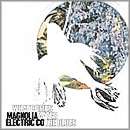
MAGNOLIA
ELECTRIC CO By now, the limited edition of Magnolia Electric Co's live album, Trials and Errors, has been sold out. But fret not, if you still want to hear that album's monster track, The Dark Don't Hide It, it's here again as a lead-off track and this time produced by Steve Albini. Albini, famous for his work with Nirvana, again shows his flair for capturing hard and soft sounds. In this case, the acoustic and electric elements of The Dark Don't Hide It are perfectly balanced. You can hear the electric guitars of bandleader Jason Molina and Jason Groth, the acoustic guitar of Jennie Benford and the steel guitar of Mike Brenner. It's a beautiful sonic curtain against which Molina's downbeat words are projected: "You said you only wanted friends for long enough to get rid of them." In many ways, while Trials and Errors suggested Molina's move away from an idiosyncratic path to a more traditionalist one, What Comes After the Blues, shows a fascination for hillbilly country. Jennie Benford's countrified The Night Shift Lullaby has her on lead vocals, without Molina! As with Okkervil River, it looks like everyone is trying to find their own Emmylou Harris. The comparison of Benford and Harris isn't an overstatement. Just listen to her backing vocals on Leave the City. Inspired
by Hank Williams' I Saw the Light, the final three cuts - Northstar Blues,
Hammer Down and I Can Not Have Seen the Light - form a triptych. Here,
the electric band steps back and the acoustic country one moves front.
In Northstar Blues, he laments: "How can I be the only one whose heart
refuses to try/ No one should forgive me." In Hammer Down, he confides:
"Sometimes I forget how I've always been sick and I don't have the will
to keep fighting." Finally, on I Can Not Have Seen the Light, he tells
us: "Every now and then it happens again/ is it the hurt or knowing that
it hurts?" All three songs fixate on darkness and redemption. While Molina
seems to be moving towards tradition, he at least keeps his heart firmly
on his sleeve. (6.5) - Philip Cheah
M.I.A. When the
Dead Kennedys recorded Holiday in Cambodia, they made a point of tourists
having holidays in someone's hell. Sri Lankan wunderkind, Maya Arulpragasam,
otherwise known as M.I.A., the latest in Asian dancehall and hip hop,
has been accused of attaining pop stardom out of someone's hell too. In
this case, it's global terrorism. Her album artwork and music video are
littered with references to bombs and bullets. The single, Sunshowers,
has a reference to the PLO (Palestine Liberation Organisation): "You
want to win the war like the PLO/well don't surrender." But when you
have neo-conservative governments that legislate for life support and
the right to live and, on the other hand, wage pre-emptive war, then you
know that M.I.A. is doing what art often does - mirror the world we live
in.
NANCI
GRIFFITH For an artist
so late in her career, it is a remarkable achievement that Nanci Griffith
is still capable of making important albums. While Hearts In Mind is not
a masterpiece as her last studio album, Clock Without Hands (2001), it
is still formidable. It's not an album that you can brush off easily.
Even a generic song such as A Simple Life contains a strong lyric: "I
don't want your wars/ to take my children." While the current war on Iraq
is now all about winning hearts and minds, Griffith is saying that the
warmongers don't have "hearts in mind." In short, they don't have concern
and compassion in their minds.
VARIOUS This soundtrack
to the book by Albert Mudrian is the most coherent presentation of death
metal ever presented, a thrashing 20 tracks featuring Napalm Death, Cannibal
Corpse, Pig Destroyer and a batch of other maniacs you likely never heard
of and won't believe can be so tuneful. People have gone to prison for
liking, let alone making, this music. This set makes it clear that death
metal is defensible on merit, not just principle. Pick hits: Repulsion's
Maggots In Your Coffin; Obituary's Slowly We Rot and Arch Enemy's We Will
Rise. - RRC
SARAH
LEE GUTHRIE & JOHNNY IRION Sarah Lee
Guthrie comes to our attention as the third generation of her family [Arlo's
her father, Woody, her grandfather]. But she keeps that attention because
she's got a great voice and uses it smartly. Johnny Irion, an American
vet, adds rock 'n' roll kick without sacrificing folk smarts, and some
excellent songs. The most notable is the haunting, haunted Gervais, which
does its best to pull down the Confederate flag that flies on the statehouse
lawn in Columbia, SC, Irion's hometown. - RRC
FRANCOISE
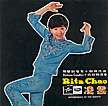
HARDY So Many Beautiful Things is the translation of 61-year-old Francoise Hardy's latest album that arrived late in January 2005 in England. Most Asians remember her either for Only Friends, covered by both Tracy Huang and Rita Chao with The Quests, or All Over The World, a radio staple back in the '60s. Melancholic, world-weary and regretful over unrequited love, is how the Ye-Ye girl is best recalled. Her life bears the mark of her shyness. Hardy hardly performed and never did a world tour. She married once and the result was a son. That experience over and done with, her quest was for romance. But while she has remained aloof, she has also made a lot of albums. So Many Beautiful Things picks up from her best album in the '70s, La Question, with acoustic guitars, gentle riffs and a hint of strings with a foreign flavor. In place of Etienne Daho, she has a trio of gifted talents on this album, producer Alain Lubrano and songwriters Perry Blake and Ben Christophers who offer her songs that are about questions.
The title track begins her quest for love and is about a dying woman reminiscing about life and love in a slow, moving ballad. So Many Beautiful Things is about having the grace to accept your fate and remember the life lived. Hardy celebrates this power of love over death. She says, "At my age, there are inevitably alarm bells which make conscious the sorrow that one can bring to people who love us while being sick or near death. I have been interested in spirituality for a long time, it is thus a way of expressing my faith in the afterlife." A l'ombre de la lune [In The Shade Of The Moon] and Soir de gala [An Evening Reception] are about unrequited love. The latter offers this verse ("Laissons faner les roses, gardons les portes closes et restons-en là/ Leave the roses to fade/Close all the doors/And let's leave things there!"). When she was younger, love was about possession and eroticism. But now her position has shifted to love for love's sake, "L'amour est plus fort que la mort/ Love is even stronger than death." The new perspective is further given space on Jardinier Benevole [Voluntary Gardener] where she says everybody is the architect of his own future, the gardener of his own garden. Englishman Ben Christopher's La Folie ordinaire [The Ordinary Madness] moves the emotions closer to the edge. On the surface the song is about how couples slowly wilt, the fading of friendship, the building of walls. But it could also be her comment on "the ordinary madness"of our passivity in accepting the tragedy of war. Hardy has been outspoken against the Second Iraq War. In this song, she wants the walls of separation to fall and history to be remade and wants to be able to believe in it. It's a very strong song. Of Irish songwriter Perry Blake's two contributions, Moments is the superior lyrically but So Many Things the more haunting in its haiku-like precision of our dissatisfaction. Our inability to love. How could
so many people be living just for this? It's so
strange When asked what drives her creativity, Hardy says, "Let us speak rather about melancholy, romanticism, sentimentality which are the sources of inspiration of the majority of songs in general," as if to say the journey is the reward. Of her peers in the French Ye-Ye scene, she alone remains active and commercially vital. Tant de belles choses took just a few weeks to be a Gold Record when it came out in France at the end of November. When she started in the '60s, she was surrounded by the Rolling Stones and the pop elite. Some writers commented she was the female Mick Jagger. Bob Dylan asked to meet with Françoise Hardy when he came to Paris for a concert at the Olympia in 1966. On the cover of his LP "Another Side of Bob Dylan", released in 1964, he had already written a long poem "Some other kinds of songs", which included the following lines for françoise
hardy Perhaps Dylan saw in Hardy a fellow traveller. Perhaps he was just enchanted by her. As David Bowie most certainly was: "I was for a very long time passionately in love with her, as I'm sure she's guessed. Every male in the world, and a number of females also were, and we all still are." So Many Beautiful Things weaves its magic in its music. We are all enchanted. - The Little Chicken Footnote:
Francoise Hardy continues to record new music, Rita Chao and the Quests
have stopped.
MAGNOLIA
ELECTRIC CO After listening
to this album for three months, I must say that the original thrill has
worn off. Which isn't to say that the Magnolia Electric Co isn't good
but it's just that at best, they stimulate you to go back to the source,
that is, Neil Young. Click
here for the full review by Philip Cheah.
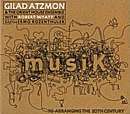
GILAD
ATZMON & THE ORIENT HOUSE ENSEMBLE Winner of the BBC Radio 3 Album of the Year for his 2003 release, Exile, Israeli jazz saxophonist (and former member of Ian Dury's Blockheads), Gilad Atzmon makes music to contemplate to. As Atzmon once wrote: "Jazz is a world view, an innovative form of resistance. For me, to play jazz is to fight the BBS (Bush, Blair and Sharon) world order, to aim towards liberation while knowing you may never get there, to fight the new American colonialism. To say what I believe in, to campaign for the liberation of my Palestinian and Iraqi brothers. To play jazz is to suggest an alternative reality, to reinvent myself, to be ready to do it till the bitter end." Click
here for the full review by Philip Cheah.
PAN SONIC After one month of listening to acoustic piano-based music courtesy of the late, great Bill Evans, I stumbled back to the Pan Sonic four-disc box set. Yes, I heard Kesto when I bought it last year, but hearing it after your ears have been tuned only to acoustic music, is like having liquid metal poured into your head. The pain is lacerating but the pleasure unbelievable. Formed in 1992, Finnish duo, Mika Vainio and Ilpo Vaisanen were originally known as Panasonic. By 1998 and three albums later, the Japanese electronics giant forced a name change on them - Pan Sonic. Known for their garage sensibility, their equipment is cobbled together from spare parts and classic analogue machines, they have created a reputation for moody ambient pieces and experimental techno. Last heard on 2001's Aaltopiiri album, the band's re-appearance on Kesto (meaning Endurance) could perhaps be a commemoration of their globetrotting years. They have done world tours to the point of exhaustion and this four-disc set seems to be an amalgamation of various influences, for example, Lines on Disc One is a tribute to Japanese noise guitar master, Keiji Haino. Each disc presents a different mood. Disc One hammers home the industrial sound of Einsturzende Neubauten where found instruments are re-configured as found electronic synth parts. Mayhem I, II, and III leave no space in your brain unturned. Disc Two shows the debt Pan Sonic has to the early industrialists of the '70s, right down to a tribute to British industrial pioneers, Throbbing Gristle, on the track, Throbbing. But the spaces are opening up. Lighter atmospheric, computer beats appear on Light Transformer and on Groundfrost Being. Disc Three
is more expansive. Sewageworld begins with the sound of a toilet flush,
after that, there is just an airy emptiness as if you are wandering down
the sewer tunnels. Soon, you end up in Corridor, a seemingly white space
until the white noise overwhelms you. It's quite clear by this time that
Kesto isn't meant as a straightforward listening experience. It's meant
to be an ongoing mystery, odd bits that you notice which are enjoyed at
odd moments. Disc Four is a 61-minute ambient track called Radiation.
You will finish listening to this album, positively glowing. (8) -
Philip Cheah
SPRING
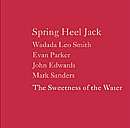
HEEL JACK One of the
masters of the muted trumpet since the '70s, Wadada Leo Smith is a perfect
foil for Spring Heel Jack's fourth avant-jazz foray for the Thirsty Ear
label. Filled with ambient-electronic passages by John Coxon and Ashley
Wales (of Spring Heel Jack), Smith's subtle blowing sets the reflective
tone of the opening tracks, Track Four and Quintet. It's only on cut three,
Lata, that fellow avant reedsman, Evan Parker, gets a more frantic out-there
sound on his saxophone on this brilliant gospel-tinged number. More reflective
beauty awaits on Track One where Smith and Parker interject each other's
meditation over Coxon's ghostly repeating piano riff. After the brilliant
but cacophonous Masses (2000), the serene joy of The Sweetness of the
Water, will leave many free jazz fans thirsting for more. (8) - Philip
Cheah
ALBERT
AYLER Already a
rarity, this nine-CD box set kept slipping out of my grasp as I travelled
across Europe late last year in search of it. And yes, it is that definitive.
Saxophonist Albert Ayler is one of the legends and leaders of free jazz.
This box is bookended by his never-before-heard first and last recordings.
Rare and unissued recordings from 1962 till his mysterious drowning in
1970 fill this set. Fans will weep just to hear the recording of Ayler
playing at John Coltrane's funeral in 1967. There are many versions of
Truth Is Marching In and Our Prayer included in this set but the funeral
performance defines just why Free Jazz is so powerful. It's about the
spirit and the feeling, lifting technique to an unimaginable plane. Free
Jazz is about why technique fails when there is no spirit. It's why even
Coltrane had his socks knocked off when he heard Ayler walk impromptu
onstage at HIS concert and blow the roof off. It's why Ayler's song titles
keep referring to spirits, prayer, truth and saints. For more... email singbigo@singnet.com.sg with the message, "Put me on your mailing list."
|
|
|